
Athens for free
There's loads to do in the Greek capital that costs nothing

Holidaying abroad, especially in a capital city, remains as expensive as ever. A visit to Athens must be high on the list of any Greek lover, but even a brief weekend there is certainly not cheap.
Fortunately, there are a surprising number and variety of things to do in Athens that are completely free. Here follows some suggestions.
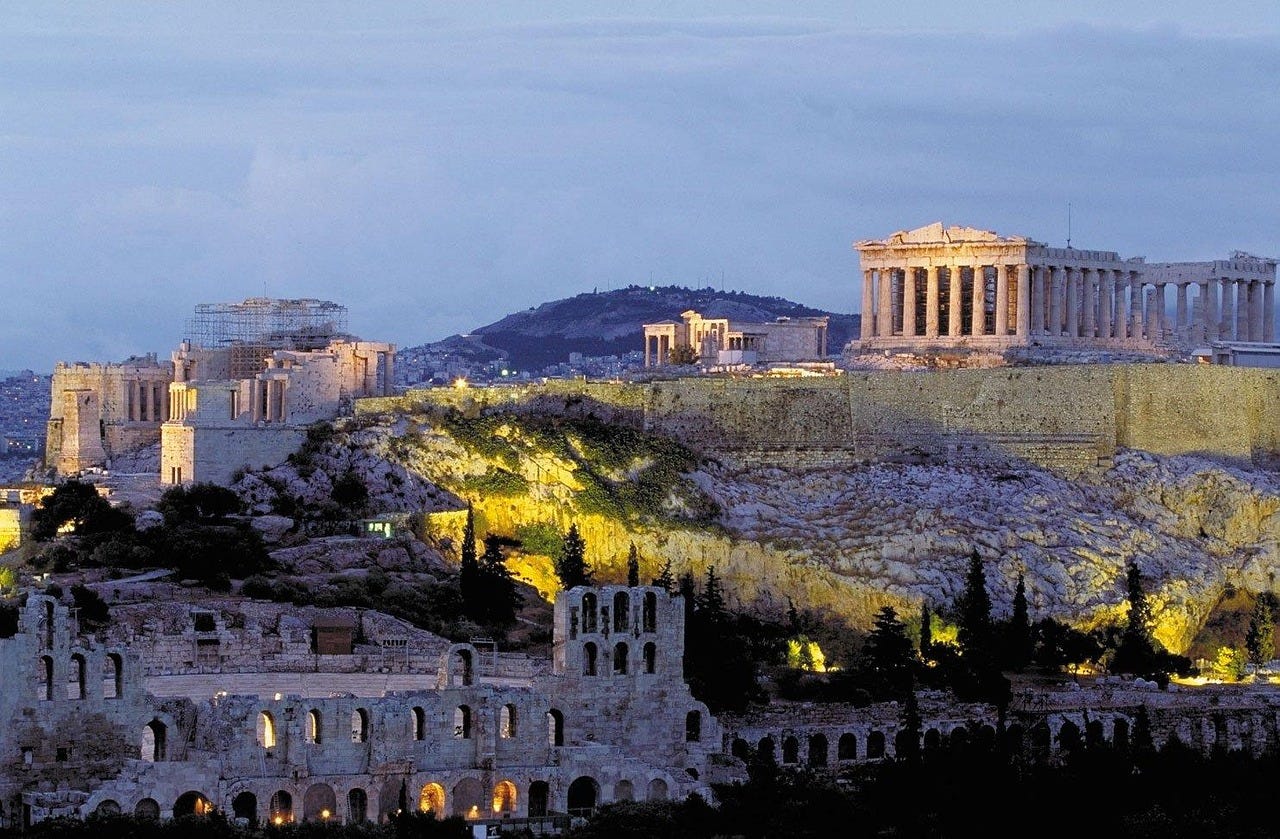
The Parthenon and the Acropolis
Overlooking the city, the Parthenon, that striking emblem of Athens set within the archaeological site, The Acropolis, is a powerful reminder of the city's ancient history, is a must for many visitors to Athens. It pays to visit outside peak times of day and year, not only because up to 20,000 people visit each day, but recent summers have become so hot that at times it has been closed due to the oven-like temperatures.
The first thing freeloaders should do is coincide a visit with one of the days admission is free, rather than the usual €30 in summer (April 1 to October 31) and €15 in winter (November 1 to March 31). Entrance to the Acropolis (and other archaeological sites, historical sites, monuments and museums owned by the State) is free to all visitors on March 6 (in memory of Greek actress, singer, activist, and politician Melina Mercouri), April 18 (International Monuments Day), May 18 (International Museums Day), the last weekend of September (European Days of Cultural Heritage), October 28 (national holiday, Ohi Day), and the first Sunday of the month from November 1 to March 31 every year.
Free admission is also given to visitors under 18, EU citizens under 25, individuals with disabilities, teachers guiding school groups, archaeologists, and journalists, provided they show valid ID. Free tickets cannot be booked online but have to be obtained at the booths.
Exploring the vicinity of The Acropolis and its most imposing remains, the Parthenon, can easily eat up much of a day - there are more than 30 points of interest at the site, including temples, a theatre, sanctuaries and caves.
Hit the beach
Not many capitals possess a beautiful coast with clean beaches that you can swim in. Just take a bus (ok, that’s not free) during the warmer months to enjoy the Athens Riviera. Votsalakia beach, which is pebbly, is in Piraeus, and Alimos beach is just 11km from the city centre.
Free art on the underground
Half of Athens’ 61 metro stations showcase art, and some function as mini-museums displaying archaeological finds. Principal ones include Evangelismos (modern art), Syntagma Square (ancient relics and George Zongolopoulos’ arresting Atrium), Egaleo and Acropolis (archaeological artefacts), Monastiraki (a plexiglass stained glass window and excavated ruins), Omonia (murals), Ethniki Amyna (statues) and Larissa (benches resembling silhouetted figures).
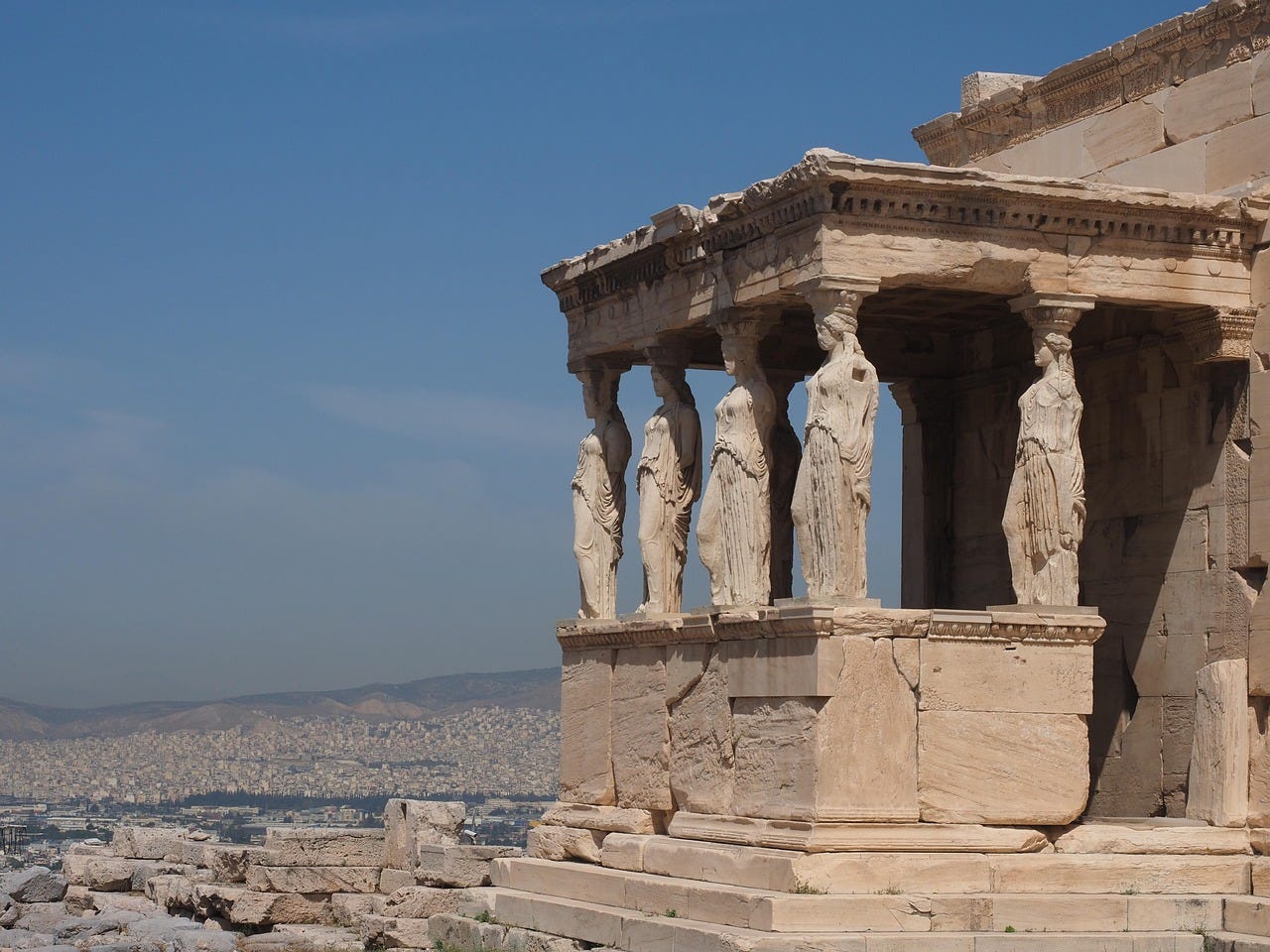
Exploring Plaka and surroundings
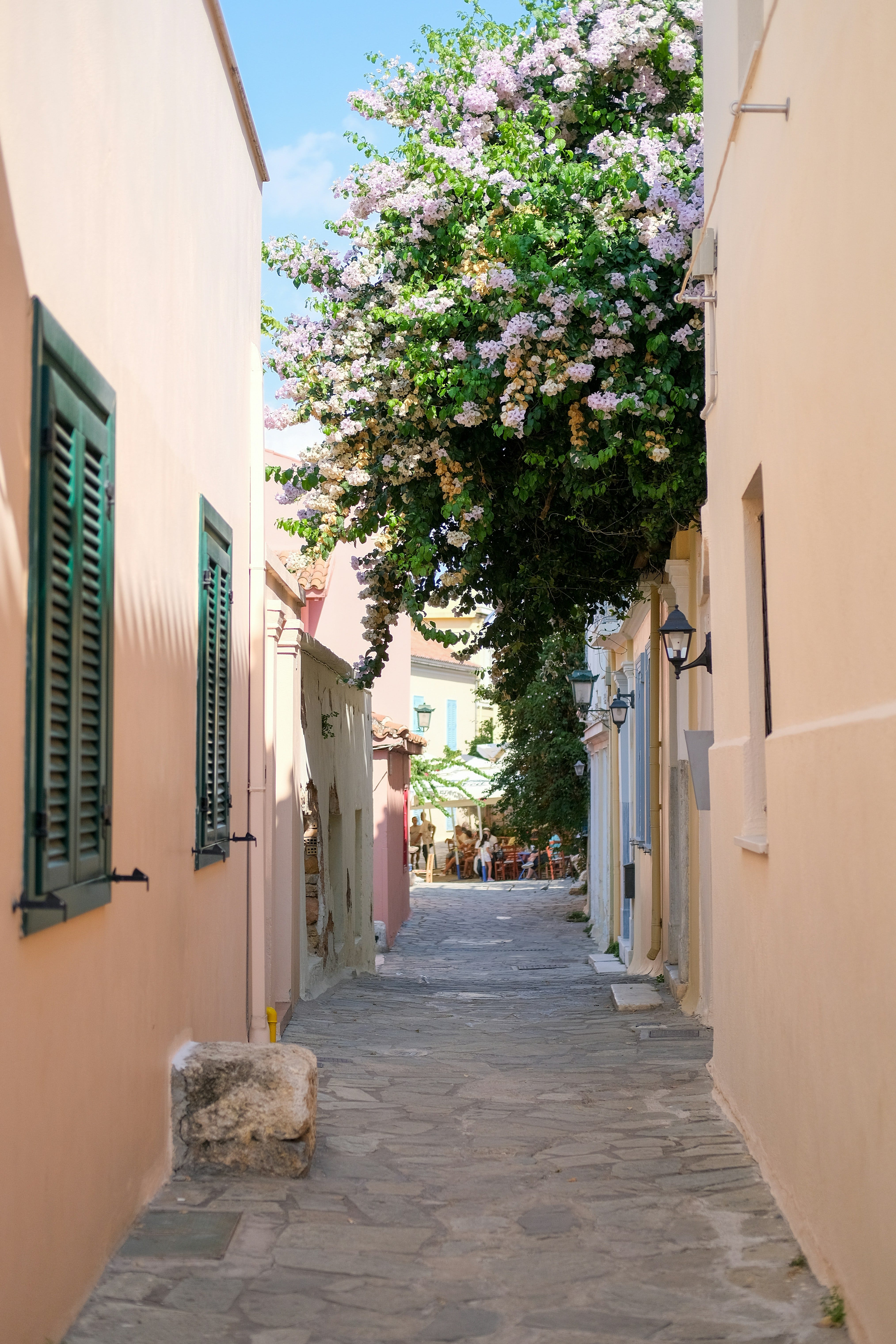
Plaka, the old quarter below the Acropolis, and the adjoining neighbourhoods of Anafiotika, Makrigianni and Koukaki, are a good area to descend upon. Although in the summer the sheer number of touts and tourists can be rather overwhelming, especially in Plaka, go at quieter times of year and there is lots to discover in this charming area.
Anafiotika, bordering the Acropolis itself, is a lovely hotchpotch of Greek island-style dome-topped blue-and-white houses peppered with bourgainvillea and is much quieter than Plaka and prettier. Makrigianni features neoclassical architecture, narrow streets and plenty of restaurants. Koukaki is lively, with streets full of cafes, bars and restaurants.
There are the Byzantine Churches of the Holy Sepulchure (between Prytaneiou and Erotokritou) and of Agia Ekaterini (off Pl Lysikratous) and the largest medieval church in Athens, the Church of the Holy Trinity at Filellinon. Biggest of all is Mitropoli Cathedral at Plateia Mitropoleos and its little sidekick next door, the 12th century church Panagia Gorgoepikoos.
On Sundays Monastiraki flea market in Plaka is a pleasant - if at times rather touristy - diversion. There are also shops here with anything from old books to chess boards and musical instruments.
Apart from the many cafes and tavernas, walking around Plaka you will pass the cylindrical 335BC Lysicrates Monument (Pl Lysikratous), with its six Corinthian columns, and the octagonal Tower of the Winds next to the Agora (the ancient market place), built about 150-125BC and ingenious for its time, functioning as a sundial, weather vane, water clock and compass.
Museums
The Hellenic Children’s Museum (Kydathinaion 14) is always free to enter. A small museum, it has interactive, hands-on, educational exhibits and activities designed to engage children in learning about subjects such as science, culture and everyday life.
Another free museum is the Spathario Museum of Shadow Theatre (Voriou Ipirou 27), which has an exhibition of colourful shadow theatre puppets.
Railway enthusiasts will appreciate the Electric Railway Museum, located within Piraeus railway station (Loudovikou 1). It has train models and machinery, historical photographs and a restored wooden train car.
The Museum of Greek Culture, aka the Benaki Museum (Koumpari 1, Kolonaki), has a large collection of artefacts encompassing Greek history from the Stone Age until today. Visit on a Thursday after 6pm until midnight and there is no admission charge. It could take you much of the day to get through the endless exhibits, which include a reconstruction of 18th century panelled reception rooms, paintings by El Greco and ancient ornamental jewellery. It is also free on some public holidays.
Like The Parthenon entrance to a few Athens museums are free to all visitors on March 6 (in memory of Greek actress, singer, activist, and politician Melina Mercouri), April 18 (International Monuments Day), May 18 (International Museums Day), the last weekend of September (European Days of Cultural Heritage), October 28 (national holiday, Ohi Day), and the first Sunday of the month from November 1 to March 31 every year.
They include the Museum of Greek Musical Instruments at Diogenous 1-3, which unearths a treasure trove of more than 1200 folk instruments including mandolins and goatskin bagpipes, many intricately inlaid with ivory, tortoiseshell and silver. Headphones allow you to listen to the music.
The National Archaeological Museum (28 Oktovriou 44) is another. It is the largest museum in Greece and has more than 11,000 exhibits covering ancient Greek culture from prehistory to late antiquity.
Also free to visit on these days is National Historical Museum (Stadiou 13), which covers Greek history from the fall of the Byzantine Empire in 1453 to the present day.
Galleries
The Athens Municipal Art Gallery (Plateia Eleftherias) contains nearly 3000 works of art by top Greek artists from leading 19th- and 20th-century Greek artists.
The city’s numerous smaller galleries include Alkinos Project Space (Alkinois 6), Arch (Gkoura 5) and Booze Cooperativa. As well as art on display, the latter is a bar with chess boards, and has live music, DJs and other events.
Street art
Striking street art thrives around the city, especially in neighbourhoods such as Keramikos, Metaxourgio, Exarhia, Omonia, Psirri, Monastiraki, Gazi and Koukaki, where large, often colourful murals and creative graffiti transform walls and buildings.
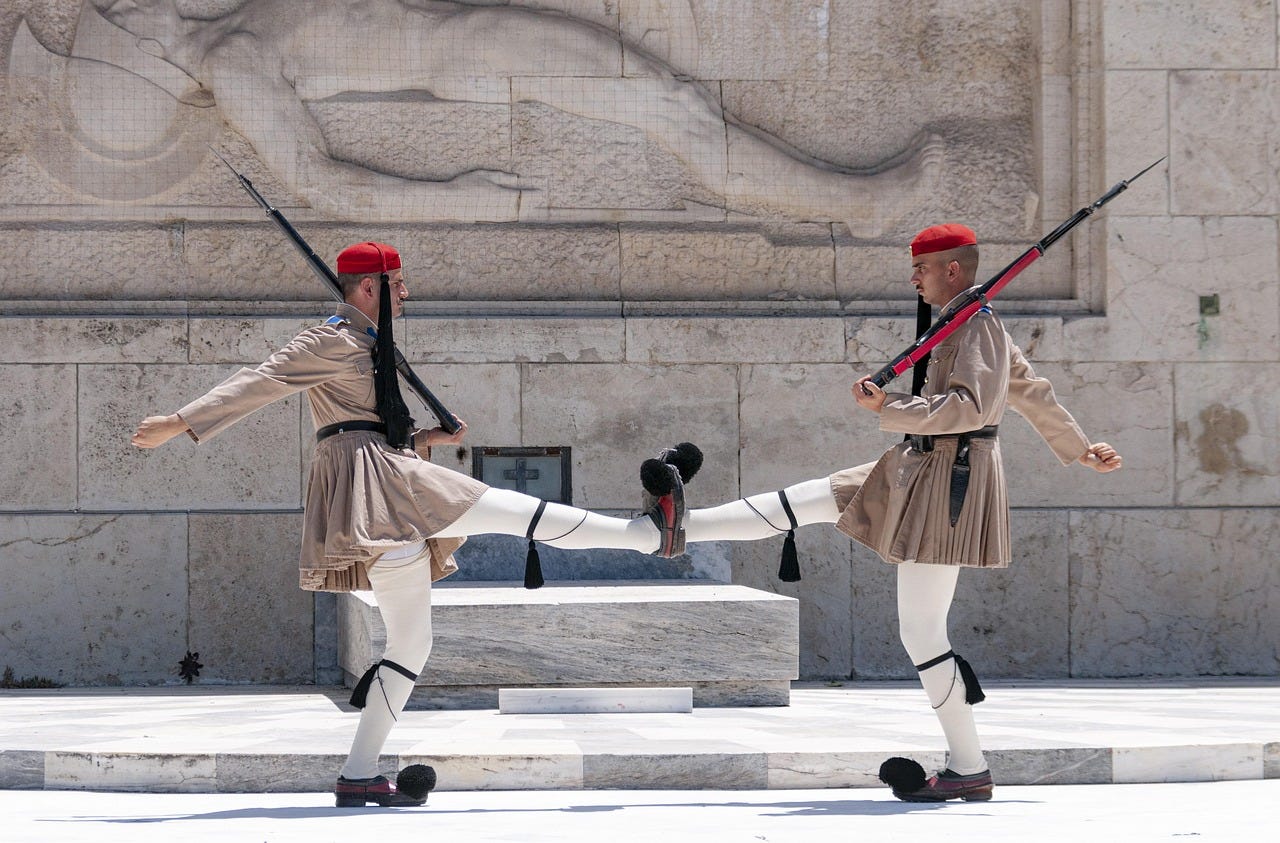
Changing of the Guard
The Evzones, Greece’s Presidential Guard, are strikingly dressed. You can see them in action at the changing of the guard, which takes place every hour outside Parliament on Syntagma Square.
In the Parliament forecourt is a monument to the war dead, the Tomb of the Unknown Soldier. This is guarded by the presidential guards, and on the hour every hour three of these soldiers march up Vas Sofias to make the change, and there is a bigger ceremony at 10.45am on Sundays and public holidays involving a military band. The guards are also on sentry duty outside the Presidential Mansion on Herodou Attikou Street.
The Parliament Building on Syntagma Square also contains a library with free, changing exhibitions open to the public on its four floors.
Walks
Athens has lots of opportunities for interesting and varied walks. One of the most splendid is the wide, tree-lined Dionisiou Areopagitiou walkway beneath the Acropolis. Walking along this, and Apolstolou Pavlou takes you past numerous monuments and all the major sites of ancient Athens, ending up at the necropolis of Kerameikos with its elaborate tombs and temples.
A stroll around the harbour area, starting at hectic Piraeus ferry port south-west of the centre and then heading around the peninsula towards the far more tranquil Zea Marina with its coffee bars, yachts and fishing boats, is a very different experience. You can stroll right around Pasalimani Bay, ending up at Faliro, before heading back to the centre.
The more energetic may be tempted to hike up pine-clad Lykavittos Hill or Philopappou Hill. As well as offering a superb view at the top, the winding paths up the latter lead to a Roman memorial and two Byzantine churches.
It’s good to catch the sunset from the Pnyx, a hilltop clearing that the Athenian assembly gathered in the days of early democracy. It has great views of the Pathenon through the pine trees.
Markets
Street markets are peppered around the city. The bustling Central Municipal Athens Market, or Varvakios Market (located between Athinas, Sofokleous, Euripidou, and Aiolou Streets in the between Omonia and Monastiraki neighbourhoods, open Mon to Sat, 7am to 6pm) has fruit, vegetables, olives, herbs, spices, cheese, olive oil, nuts and freshly caught seafood. There are street food vendors offering Greek specialities such as gyros, souvlaki, or spanakopita.
There are also laiki agora (farmers’ markets) in neighbourhoods including Pagrati (16 Archimidous) and Kolonaki (22 Xenokratoous), both on Fridays, which give a glimpse of everyday Athenian life. Often you can sample products.
Near the Acropolis is Koukaki Market (Dimitrakopoulou 99, Mon-Sat 8am-9pm), offering local-sourced foods and crafts.
Ermou Street Market (Ermou Street, daily 9am-9pm) connecting Syntagma Square to Monastiraki has clothing, shoes, souvenirs and some food vendors.
Parks and gardens - and a zoo
A bigger proportion of the city is made up of parks and gardens than may at first seem apparent, and the National Gardens especially, in its central location around Parliament, is a very convenient green refuge from the summer heat. Thousands of exotic trees and plants from around the world are packed within it. There’s a duck pond, a cafe - and a free zoo.
Other top choices for some green open space include Athens First Cemetery, with its neat gardens, mausoleums and ornate tombstones, and Areos Park, north of the Archaeological Museum, the biggest park in Athens.
Diomedes Botanical Garden at Iera Odos 401 in the western district of Haïdari is a 20-minute ride from the centre, but at 460 acres is huge and a lovely place to stroll, amongst 3000 plant species.
Go on a free walking tour
Companies such as Athens Free Tour, FreeTour, Walkative and Strawberry Tours offer free tours of different aspects of the city that typically last around two hours. Although free, you are encouraged to tip at the end.
Lastly…a museum at Athens Airport
On your return home, if you find yourself at Athens International Airport, before you go airside head for the relatively quiet mezzanine level of the main departures area. Here there is a little free archaeological museum displaying an impressive collection of nearly 200 authentic artefacts dating from the Neolithic and early Hellenic eras to the post-Byzantine period. A number of them came to light during the process of building the airport. There is also a small art gallery with temporary exhibitions.
Quite a few of my posts are free but every paid subscriber I have on Substack helps keep this newsletter going. These articles take time to research and write. Paid subscribers have access to all posts. A subscription is typically less than a monthly coffee at a cafe, so please consider subscribing if you can. And every like or shared post helps the Substack algorithm to show my writing to a few more people.
Thank you for this excellent guide!